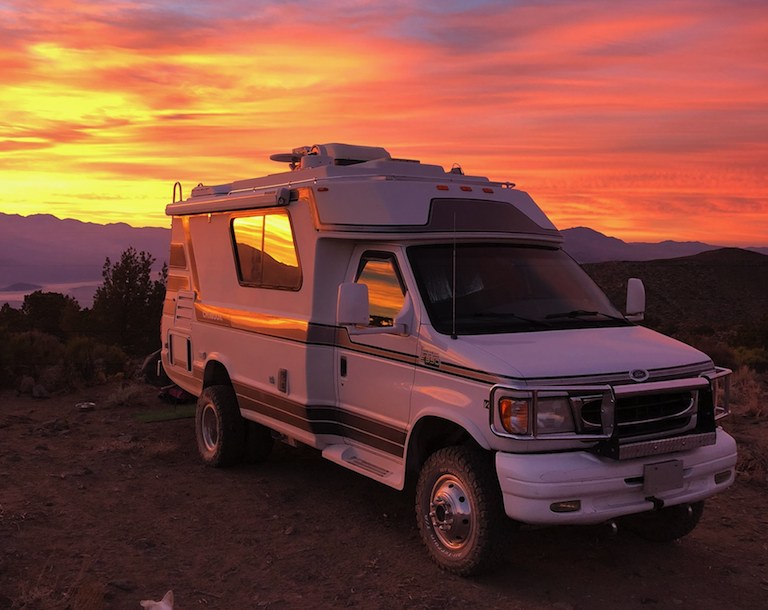
have you ever used your self jump start?

have you ever used your self jump start?
I'm just curious how many of you guys have actually used your self jump start function? I'm thinking of rearranging some wiring, and just wondered if it really makes sense to keep it. I carry a lithium jump pack and jumper cables anyway, and the only way I'd kill my battery is if I leave my lights on...
1994 Premier

Re: have you ever used your self jump start?
I haven't used mine because I have never needed to, but a friend with whom I RV has used his many times. Although actually his non-Chinook rig did not come with self-jump-start ability, but only a combiner that could be used for charging while underway. However, he carried jumper cables, and could thus reach from his house bank to his start battery and self-jump start that way. He had a combination of some parasitic drain that was causing his start battery to run down, plus an overly small start battery (since fixed). Since he still wanted the ability to connect start and house banks (albeit used very infrequently), when we re-did his electrical, we put in a thicker wire, with fusing at both ends and a manual switch in between (taking the place of the combiner). The wire is stout enough that it can be fused with large enough fuses to allow self-jump-starting, thus the switch can be used for that as well as combining with no "extra" parts.
Even though we both carry lithium jump packs, I can still see a use for the self-jump start. For one thing, it's fast and can be done from the driver's seat. That could be handy in certain situations. And you can't forget to charge it up (as with the lithium packs which can run down in storage). Also, as mentioned above, if you have charge combining ability, you are most of the way there (although the fusing has to be slightly higher, but you'd want that larger wire to combat voltage drop anyway).
I like both. I would consider not carrying jumper cables first (of the trio of self jump, battery pack, and jumper cables) because they require a second vehicle. I like the lithium pack because it's small, has multiple uses, and I can help someone else out without moving my rig or involving it in any way (have done that a few times). And I have the self-jump setup wired in place. Hence the jumper cables would be the first to go if one had to go. But I do carry all three now.
Thus I were re-doing (again), for me to eliminate the self-jump ability, I'd also "need" to eliminate the start/house combiner cable (because if I didn't, there is no reason to eliminate self jump ability). Well, I will say that I almost never combine (because my solar charger is ten times smarter and better than an alternator for charging the house bank; the shore charger would be too if I ever used it), and I have never self-jump started. So based on that maybe I could eliminate the whole works (which would eliminate a long 1/0 cable, a fuse, and a switch*). BUT, one, I already have it in place, and I'm not THAT weight constrained. And I have used the combine feature a couple of times. And the self-jump feature is automatically included since it uses the same switch/wire/fuse as the combiner.
(If only interested in actual thread topic, you can stop reading now... )
)
BUT....I won't be doing that (eliminating the combine wire), because I have a dastardly plan. It's not likely to appeal to very many people, but just to put my comment in context I'll mention it. See, I have not once used my generator. So I lug it around in what could be good storage space. But I HAVE used a camping buddy's generator (so it could have been mine) for precisely three purposes:
1) Electric heat gun when doing electrical work (I have tried many non-electric types but have never found a satisfactory one).
2) Vacuum cleaner (I can use 18v batteries, but it's great to just plug it in and let 'er rip). This one will mostly go away when I remove the carpeting (O' Happy Day), but not completely.
3) One or two power tools that I don't have battery versions of and/or the battery versions don't work as well (router, buffer, Multi-Master).
As you can see, these are all very occasional uses. The heat gun work I could just take a campground site and plug in, but the power tools make noise so that's a great time to be boondocking (miles away from people so no-one is bothered). I have removed the rooftop air-conditioner, the microwave, and the electric coffee maker as these are not things I use.
So I noodled options. And I have come up with one that I think will work great for me, and thus I will remove/sell the generator this winter (which has all of about 21 hours on it, none of them put on by me actually needing a generator). I tested my plan by trying it out on a friend's rig who had all of the components in place so that I could measure things.
My plan is to install either a 1000 or 1500 watt inverter. Except for the above scenarios, I won't be using it, because I don't really have much that draws 110 on a regular basis, and the small things I do have (toothbrush charger, for example) will easily run from a plug-in-to-cigarette-lighter 75 watt inverter. So why put it in? Specifically to run the heat gun, vacuum, and power tools. Will my battery bank support much of that large a draw? Yes, for short runs, but I don't plan for it to. My plan (and this is what I tested on my buddy's rig, which is set up basically just like mine but with a 2000 watt inverter) is to simply run the engine - in combine mode - for those short periods of time when I have the inverter/tools on. I did this on my friend's rig by using the exact tools I plan to use, his 2000 watt inverter, and his battery meters (he also has the V10 with the same alternator we do).
I was able to see that the majority of the power that the inverter was drawing came "straight from" the alternator/combiner line. My batteries thus will barely have to lift a finger. So, for my limited and occasional uses, this should work out just fine and makes more sense to me than carrying around a two-hundred pound gasoline generator. Side bonus is the inverter won't "mind" if I don't use it for a year, whereas the generator likes to be exercised, needs maintenance, etc.
I know this wouldn't suit most folks, so I'm not suggesting it by any means. But for me I think it will work just fine, and that's one reason I will be keeping the combiner line (1/0 wire from start batt to house bank). And since I have the combiner line, it works as a self-jump start mechanism without adding or changing anything.
BG
*In case it wasn't clear above, the standard system that came on my Chinook is not what I have now. My rig (and likely many other Chinooks) had a 4AWG wire running from start battery to house bank, through a Sure-Power combiner. This included an off-shoot wire, from the combiner, that ran to a "self jump start" switch on the overhead by the driver. An issue with this system was that the wire wasn't properly fused at both ends (I don't think it could have been, due to a combination of smaller wire and large current). I removed that and put in larger, 1/0 wire, with a fuse at both ends. In the place of the combiner, I put a manual switch. But that's only because I rarely use it. If I had wanted to, I could have put in a combiner instead of the switch. I would have used a Blue Sea 7622. The 7622 includes a switch that can be used for self-jump-starting (that is, it lets you choose to combine at your will, which is all self-jump-starting really is).
PS: I could have used self-jump-start once on my previous camper van. Just after I bought it, I stopped at a rest area to sack out (super tired after a marathon drive in a rental car to pick up said camper van) and forgot the lights on. Woke up, went to start, and .... dead battery That rig had no self-jump-start feature on the combiner, and I had no battery pack (they hadn't come along yet) and no jumper cables (see: drove rental car to pick up camper van. Luckily, I was only about an hour from the seller's house, and he came out and gave me a jump start (whew).
Even though we both carry lithium jump packs, I can still see a use for the self-jump start. For one thing, it's fast and can be done from the driver's seat. That could be handy in certain situations. And you can't forget to charge it up (as with the lithium packs which can run down in storage). Also, as mentioned above, if you have charge combining ability, you are most of the way there (although the fusing has to be slightly higher, but you'd want that larger wire to combat voltage drop anyway).
I like both. I would consider not carrying jumper cables first (of the trio of self jump, battery pack, and jumper cables) because they require a second vehicle. I like the lithium pack because it's small, has multiple uses, and I can help someone else out without moving my rig or involving it in any way (have done that a few times). And I have the self-jump setup wired in place. Hence the jumper cables would be the first to go if one had to go. But I do carry all three now.
Thus I were re-doing (again), for me to eliminate the self-jump ability, I'd also "need" to eliminate the start/house combiner cable (because if I didn't, there is no reason to eliminate self jump ability). Well, I will say that I almost never combine (because my solar charger is ten times smarter and better than an alternator for charging the house bank; the shore charger would be too if I ever used it), and I have never self-jump started. So based on that maybe I could eliminate the whole works (which would eliminate a long 1/0 cable, a fuse, and a switch*). BUT, one, I already have it in place, and I'm not THAT weight constrained. And I have used the combine feature a couple of times. And the self-jump feature is automatically included since it uses the same switch/wire/fuse as the combiner.
(If only interested in actual thread topic, you can stop reading now...
)BUT....I won't be doing that (eliminating the combine wire), because I have a dastardly plan. It's not likely to appeal to very many people, but just to put my comment in context I'll mention it. See, I have not once used my generator. So I lug it around in what could be good storage space. But I HAVE used a camping buddy's generator (so it could have been mine) for precisely three purposes:
1) Electric heat gun when doing electrical work (I have tried many non-electric types but have never found a satisfactory one).
2) Vacuum cleaner (I can use 18v batteries, but it's great to just plug it in and let 'er rip). This one will mostly go away when I remove the carpeting (O' Happy Day), but not completely.
3) One or two power tools that I don't have battery versions of and/or the battery versions don't work as well (router, buffer, Multi-Master).
As you can see, these are all very occasional uses. The heat gun work I could just take a campground site and plug in, but the power tools make noise so that's a great time to be boondocking (miles away from people so no-one is bothered). I have removed the rooftop air-conditioner, the microwave, and the electric coffee maker as these are not things I use.
So I noodled options. And I have come up with one that I think will work great for me, and thus I will remove/sell the generator this winter (which has all of about 21 hours on it, none of them put on by me actually needing a generator). I tested my plan by trying it out on a friend's rig who had all of the components in place so that I could measure things.
My plan is to install either a 1000 or 1500 watt inverter. Except for the above scenarios, I won't be using it, because I don't really have much that draws 110 on a regular basis, and the small things I do have (toothbrush charger, for example) will easily run from a plug-in-to-cigarette-lighter 75 watt inverter. So why put it in? Specifically to run the heat gun, vacuum, and power tools. Will my battery bank support much of that large a draw? Yes, for short runs, but I don't plan for it to. My plan (and this is what I tested on my buddy's rig, which is set up basically just like mine but with a 2000 watt inverter) is to simply run the engine - in combine mode - for those short periods of time when I have the inverter/tools on. I did this on my friend's rig by using the exact tools I plan to use, his 2000 watt inverter, and his battery meters (he also has the V10 with the same alternator we do).
I was able to see that the majority of the power that the inverter was drawing came "straight from" the alternator/combiner line. My batteries thus will barely have to lift a finger. So, for my limited and occasional uses, this should work out just fine and makes more sense to me than carrying around a two-hundred pound gasoline generator. Side bonus is the inverter won't "mind" if I don't use it for a year, whereas the generator likes to be exercised, needs maintenance, etc.
I know this wouldn't suit most folks, so I'm not suggesting it by any means. But for me I think it will work just fine, and that's one reason I will be keeping the combiner line (1/0 wire from start batt to house bank). And since I have the combiner line, it works as a self-jump start mechanism without adding or changing anything.
BG
*In case it wasn't clear above, the standard system that came on my Chinook is not what I have now. My rig (and likely many other Chinooks) had a 4AWG wire running from start battery to house bank, through a Sure-Power combiner. This included an off-shoot wire, from the combiner, that ran to a "self jump start" switch on the overhead by the driver. An issue with this system was that the wire wasn't properly fused at both ends (I don't think it could have been, due to a combination of smaller wire and large current). I removed that and put in larger, 1/0 wire, with a fuse at both ends. In the place of the combiner, I put a manual switch. But that's only because I rarely use it. If I had wanted to, I could have put in a combiner instead of the switch. I would have used a Blue Sea 7622. The 7622 includes a switch that can be used for self-jump-starting (that is, it lets you choose to combine at your will, which is all self-jump-starting really is).
PS: I could have used self-jump-start once on my previous camper van. Just after I bought it, I stopped at a rest area to sack out (super tired after a marathon drive in a rental car to pick up said camper van) and forgot the lights on. Woke up, went to start, and .... dead battery
That rig had no self-jump-start feature on the combiner, and I had no battery pack (they hadn't come along yet) and no jumper cables (see: drove rental car to pick up camper van. Luckily, I was only about an hour from the seller's house, and he came out and gave me a jump start (whew).1999 Concourse
Re: have you ever used your self jump start?
Thanks for the thoughts.. I'll think this through a little more. Just trying to save time and materials. 
1994 Premier
Re: have you ever used your self jump start?
Oh absolutely. For me, since the Chinook (and really, any RV) was made with a certain "market" in mind -- and I may or may not fit into that mold -- I re-think all the systems and etc. Sometimes it takes a while for me to realize when I'm thinking inside the box and step back, just because we're all used to certain things being certain ways.
In case it was lost in my possibly over-voluminous post above, what I was saying is that since I felt it was desirable to re-wire the combiner function no matter what (to eliminate voltage drop and to be able to fuse the wires), once I did that the self-jump-start function was already there, with no extra anything. I used a manual switch, but the same would have (mostly) gone for a Blue Sea 7622 (with the addition of some included smaller wires and switch for remote self-jump-start ability vs. needing to touch the actual 7622, if desired).
So for me the real question would have been "should I even wire ANY combine function." But, that's a case where I just assumed "Well of course I should, duh!" So I did it. Looking back on it now, I probably had no need because I haven't really needed/wanted to use it. On the other hand, I already had all of the components and wire, and it doesn't hurt anything to have it. And now it will enable me to fit my "inverter method" of substituting for my specific, occasional need for certain things that otherwise would be done under generator power when off-grid. So ultimately I'm very glad I did set it up. But of course we all use our rigs in our own way.
In case it was lost in my possibly over-voluminous post above, what I was saying is that since I felt it was desirable to re-wire the combiner function no matter what (to eliminate voltage drop and to be able to fuse the wires), once I did that the self-jump-start function was already there, with no extra anything. I used a manual switch, but the same would have (mostly) gone for a Blue Sea 7622 (with the addition of some included smaller wires and switch for remote self-jump-start ability vs. needing to touch the actual 7622, if desired).
So for me the real question would have been "should I even wire ANY combine function." But, that's a case where I just assumed "Well of course I should, duh!" So I did it. Looking back on it now, I probably had no need because I haven't really needed/wanted to use it. On the other hand, I already had all of the components and wire, and it doesn't hurt anything to have it. And now it will enable me to fit my "inverter method" of substituting for my specific, occasional need for certain things that otherwise would be done under generator power when off-grid. So ultimately I'm very glad I did set it up. But of course we all use our rigs in our own way.
1999 Concourse
Re: have you ever used your self jump start?
I used it once. Left the headlights on when I flew away from an airport. Hit the button and it started right up. It might not be related, but my backup camera fried right around that time. Had it replaced and been good since, but haven't needed to jump since.
-
jeanie19

- **Forum Contributor**
- Posts: 72
- Joined: July 31st, 2014, 10:56 am
- Location: Whidbey Island, Washington
Re: have you ever used your self jump start?
I tried to use the jump-start once, when I'd turned on the backup camera to use going forward and forgot to turn it off. The jump-start did not work, maybe because the vehicle battery was completely dead? Have not tried it again to see how it should work tho.
Jeanie K.
2000 Chinook Concourse
Plank flooring, Wave heater, CO cubby
2000 Chinook Concourse
Plank flooring, Wave heater, CO cubby
Re: have you ever used your self jump start?
It is wired such that the house battery will activate the combining relay in the event that your crank battery is completely dead. If yours didn't work, you probably have a bad switch, bad ralay, or faulty wiring.
1994 Premier
Re: have you ever used your self jump start?
I have an idea of what would be another possible cause for it not having worked, although I have never proved it to be true (I re-wired mine a different way). My line of thinking is that since the connecting wire is on the smaller side, maybe if the start battery is trying to pull big amps from the house bank quickly, it "can't get through the too small hose." Never versions of my previous camper van had a similar setup, and what they advised was to connect the two banks for awhile while NOT trying to start the engine (to let some of the power just "flow" over to the start battery first). As I said, I haven't been in this situation to try it, but it makes sense to me on paper. The downside with the OEM setup is that you have to hold the switch closed that whole time.
(Just ran this by a buddy as we sit having coffee and he thinks this sounds reasonable as well.)
Granted, something in the whole setup could be truly broken, but I'm thinking even if it's working as-built, it may not be able to pass large numbers of amps super quickly as it would be trying to do if you were holding the switch closed ONLY as you tried to start, and the start battery were run down (as it would tend to be if you were needing self-jump-start, obviously.
(Just ran this by a buddy as we sit having coffee and he thinks this sounds reasonable as well.)
Granted, something in the whole setup could be truly broken, but I'm thinking even if it's working as-built, it may not be able to pass large numbers of amps super quickly as it would be trying to do if you were holding the switch closed ONLY as you tried to start, and the start battery were run down (as it would tend to be if you were needing self-jump-start, obviously.
1999 Concourse