Hi All,
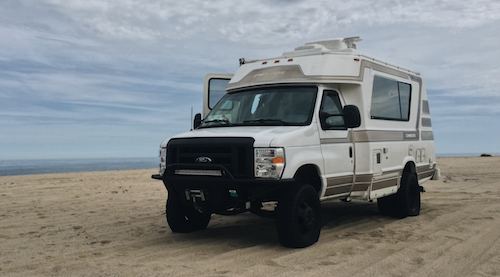
We just acquired a 2001 7.4 liter Destiny from an out-of-state seller. It handled beautifully on the 600 mile trip home. However on that trip, we discovered that the alternator is not charging the coach batteries. The coach batteries have been discharged to the point, they will no longer take a full charge from the generator, shore power or a 4 stage stand-alone charger.
Once the surface charge is allowed to dissipate, batteries will only hold 10.7 volts. After more thoroughly looking through the seller's papers including owner's manual with wiring diagrams, it appears this may not be a new problem. In this unit, someone has simply replaced the smart solenoid with a continuous duty solenoid for the boost start. It functions as one would expect, when the "Boost button" is held down. I was getting ready to order a new 200 Amp sure power 1315-200 smart solenoid and noticed that www.surepower.com has recently been offered for sale. I was told by one of their distributors, they are out of stock and don't expect to be able to replenish for around 45 days.
Speculating that, they may be in the process of closing down their operations, I'm curious if anyone here has come up with a viable alternative to this piece of hardware and if an installation or connection diagram is available. I have read and enjoyed many hours lurking and reading on this forum. It seems, you have a real electrical Guru here in Blue~Go and, I have enjoyed reading many of his postings. Yet, I have not encountered any mention of an alternate hookup and was wondering if he or any other members might be able to steer me in the right direction. A picture of the under-hood smart solenoid installation and one of the house battery box configuration on this vehicle would also be a huge help.
Thanks in advance to any and all that may respond.
Smart Solenoid Question 2001 Destiny

Re: Smart Solenoid Question 2001 Destiny
If I were putting in this type of device I would go with a Blue Sea 7622. Blue Sea makes great components (primarily/initially for the marine world) and the 7622 is a solid device. It is bi-directional, has a manual override knob (say you need to work on the house bank, want to make sure no power comes in from start bank), and a remote switch. It is the magnetic latching type so there is basically no power used by it and very little induced voltage drop (as others have).
I removed my stock Surepower 1315 for three reasons: Induced voltage drop, lack of control, and it was re-called. If I had replaced the Surepower with a new similar device it would have been the Blue Sea 7622. Since I only very rarely combine, and like simplicity when I can, I went with a simple switch, but that's not for dislike of the concept (I have a Blue Sea unit in my boat). I also didn't want any of these devices riding around in the hot engine compartment exposed to spray, etc (and very hard to reach!). So I moved things "indoors." I also upped the wire gauge and added appropriate fusing while I was at it (original Chinook wire was too small to fuse for jump load).

https://www.bluesea.com/products/7622/M ... 2V_DC_500A
I removed my stock Surepower 1315 for three reasons: Induced voltage drop, lack of control, and it was re-called. If I had replaced the Surepower with a new similar device it would have been the Blue Sea 7622. Since I only very rarely combine, and like simplicity when I can, I went with a simple switch, but that's not for dislike of the concept (I have a Blue Sea unit in my boat). I also didn't want any of these devices riding around in the hot engine compartment exposed to spray, etc (and very hard to reach!). So I moved things "indoors." I also upped the wire gauge and added appropriate fusing while I was at it (original Chinook wire was too small to fuse for jump load).
https://www.bluesea.com/products/7622/M ... 2V_DC_500A
1999 Concourse
Re: Smart Solenoid Question 2001 Destiny
Not to derail the topic too much, but I recently read on another forum (Winnebago Ria's) about a major refit. The guy sounds like their Blu-go. He swapped the batteries for lithium. Swapped the charger for a lithium one. Put all 110 behind a 2k watt inverter, and something about the alternator charging side. He did it to run the microwave or his wife blow dryer briefly. He claims the system is working great and is able to recharge much quicker than lead/AGM.
Witth a bit of research if you have to buy new batteries anyway.
Witth a bit of research if you have to buy new batteries anyway.
Re: Smart Solenoid Question 2001 Destiny
More innovation, this time without lithium,
The following is a list of our mods:
3 150 watt solar panels on roof
200 watt portable solar panel (added additional receptacle in inverter compartment)
Replaced the Xantrex 1000 watt modified sine wave inverter with a Samlex 2000 watt pure sine wave inverter
http://www.samlexamerica.com/products/P ... px?pid=111
With the samlex inverter we needed to add an external transfer switch as the Xantrex has one internal
http://www.parallaxpower.com/ats301-tra ... tch-ats301
Added an additional outlet from the inverter to the galley (this powers our induction hotplate)
Added an additional ATS301 transfer switch between the microwave and the Shore power/generator and the additional galley inverter outlet.
Replaced the two 54Ah dual purpose batteries with a pair of PVX 3050T Sunextenders
http://www.sunxtender.com/solarbattery.php?id=26
See Ken Lengers site
https://www.flickr.com/photos/klenger/a ... 3070661607
We moved the fuses to rear of the battery compartment
Needed to increase the length of the frame ground by about 12"
Use the old frame ground wire to increase the coach positive by using a terminal post available on the web
We cut 4 pockets in the step where the battery terminals have a possibility of shorting. These batteries can supply over 5000 instantaneous amps there is little to no clearance between the step metal bottom and the terminals. The 3050T's triple the current capacity we had with the stock batteries.
The above has transformed our dependence on the pedestal.
I had considered lithium, the drawback is these can't be charged when the temp drops below 32 degrees.
We do spring and fall camping and we've hit low to mid 20's
Hope this helps
Best,
Ron
(I'm not Ron and I hope he doesn't mind my copy/paste)
The following is a list of our mods:
3 150 watt solar panels on roof
200 watt portable solar panel (added additional receptacle in inverter compartment)
Replaced the Xantrex 1000 watt modified sine wave inverter with a Samlex 2000 watt pure sine wave inverter
http://www.samlexamerica.com/products/P ... px?pid=111
With the samlex inverter we needed to add an external transfer switch as the Xantrex has one internal
http://www.parallaxpower.com/ats301-tra ... tch-ats301
Added an additional outlet from the inverter to the galley (this powers our induction hotplate)
Added an additional ATS301 transfer switch between the microwave and the Shore power/generator and the additional galley inverter outlet.
Replaced the two 54Ah dual purpose batteries with a pair of PVX 3050T Sunextenders
http://www.sunxtender.com/solarbattery.php?id=26
See Ken Lengers site
https://www.flickr.com/photos/klenger/a ... 3070661607
We moved the fuses to rear of the battery compartment
Needed to increase the length of the frame ground by about 12"
Use the old frame ground wire to increase the coach positive by using a terminal post available on the web
We cut 4 pockets in the step where the battery terminals have a possibility of shorting. These batteries can supply over 5000 instantaneous amps there is little to no clearance between the step metal bottom and the terminals. The 3050T's triple the current capacity we had with the stock batteries.
The above has transformed our dependence on the pedestal.
I had considered lithium, the drawback is these can't be charged when the temp drops below 32 degrees.
We do spring and fall camping and we've hit low to mid 20's
Hope this helps
Best,
Ron
(I'm not Ron and I hope he doesn't mind my copy/paste)
Re: Smart Solenoid Question 2001 Destiny
The original post I was referring to.. These reyo/via guys are coming up with some good stuff. I'm guessing they are expensive solutions? The yahoo reyo via group.
I replaced the house batteries with 2 lithium ion 100amp hr drop in replacements capable of a steady 200amp discharge or a 400 amp discharge for 15 min without activating protection circuits. Then removed the factory inverter and the silly 2 circuit bypass it used. I installed a 2000w pure sine wave inverter that powers the whole coach. I also put in a battery monitor with Bluetooth in order to keep track of current draw and remaining capacity. I added a 60 amp hr lithium converter in addition to the factory converter. This allows very fast recharge. I also ran a switch from the dash to the battery isolation relay under the passengers seat to allow me full control of charging the house bank off of the alternator when under way. I built all new 2/0 battery cables and moved the new inverter closer to the batteries. I am amazed at the performance of this system. Very cold temperatures are the only issue with lithium ion batteries and that is only related to charging. That is why if driving in very cold climates I can turn off alternator charging until the heating pads have time to work. However I plan to spend very little time in sub freezing temps anyways. But this was a cold March and everything worked great! A true useable 160 amp hrs With super fast recharge times is amazing! Microwave, coffee pot or wife's hair dryer works like at home without the generator. Total cost was not cheap but I feel it was worth every penny. Lithium batteries provide non sagging voltage under load or when close to being depleted. These things just work great as deep cycle storage.
Bill 2015 Via P every option
I replaced the house batteries with 2 lithium ion 100amp hr drop in replacements capable of a steady 200amp discharge or a 400 amp discharge for 15 min without activating protection circuits. Then removed the factory inverter and the silly 2 circuit bypass it used. I installed a 2000w pure sine wave inverter that powers the whole coach. I also put in a battery monitor with Bluetooth in order to keep track of current draw and remaining capacity. I added a 60 amp hr lithium converter in addition to the factory converter. This allows very fast recharge. I also ran a switch from the dash to the battery isolation relay under the passengers seat to allow me full control of charging the house bank off of the alternator when under way. I built all new 2/0 battery cables and moved the new inverter closer to the batteries. I am amazed at the performance of this system. Very cold temperatures are the only issue with lithium ion batteries and that is only related to charging. That is why if driving in very cold climates I can turn off alternator charging until the heating pads have time to work. However I plan to spend very little time in sub freezing temps anyways. But this was a cold March and everything worked great! A true useable 160 amp hrs With super fast recharge times is amazing! Microwave, coffee pot or wife's hair dryer works like at home without the generator. Total cost was not cheap but I feel it was worth every penny. Lithium batteries provide non sagging voltage under load or when close to being depleted. These things just work great as deep cycle storage.
Bill 2015 Via P every option
Re: Smart Solenoid Question 2001 Destiny
Lithium is probably the wave of the future - and many people are using them now. Lots of advantages. But with that comes quite a bit of expense now, and not just the batteries, but the support system (charger, etc.). This is true to some extent for any batteries (none of them really *like* alternator charging, or the charge voltage put out by the typical stock RV charger), but is taken up a notch due to what lithium likes, and how expensive they are to replace if you make a mistake.
I looked at them seriously for my latest re-battery (boat), but decided to wait another round so stuck with AGM for now. The lightness factor (plus ability to have fewer batteries, size-wise) was VERY attractive for that purpose; slightly less so for the Chinook (in which I have the space and weight capacity for the AGM's I need without really making a dent in things). But my guess is that I may go lithium on the next round (which hopefully will be a few years yet).
As far as acceptance rate (how quickly they will take a charge), AGMs already have a much higher acceptance rate than flooded cell batteries, and likely with any of our charging sources in Chinooks, they already accept just about all the charge you can throw at them with typical means (60 amp shore charger, 60-90 amp alternator current, solar panels). Granted lithium can accept an even larger charge than AGMs, but I don't think most of us would have any way to provide that much.
But again, lithium do have MANY very attractive qualities. And the cost is mitigated somewhat because you can have a smaller bank (since you can discharge it more without problem); but it's still (at this point) either expensive, or slightly less expensive if you are a real do-it-yourselfer (with cells, BMS, etc.). I look forward to running lithiums at some point. Just not quite yet given my parameters.
A last note is that (like any charging/usage scheme) it's a whole system. So if you go lithium (and to a lesser extent, AGM) you need to not only get the batteries, but make sure your chargers (solar, alternator, shore/generator) can provide what they need (many can't), that your battery monitors will work with them, that your fusing is up to par (very big AIC rating), that you keep them from getting too hot where they live (and don't charge them when they are below freezing), etc. Not to discourage, but just to say that you probably wouldn't want to just "drop in" a set of lithiums. The same is true for AGM but to a lesser extent (since they are more similar to flooded cells than lithiums are).
In my experience many RV-ers (not all!) don't want to do a huge re-vamp of the entire system, so it's just something to think about and decide where you stand on the scale of small to large and cheap to $$ projects (I like to re-do the whole system, and pretty much did, but still for me right now (or rather a year or so ago) AGM's made the most sense taken as a whole. But every situation and usage pattern is different. (For example, I don't use much AC power, so have no need for the ability to suck huge numbers of amps out at one time, via inverter. There are many considerations like that that can sway one in one or another direction.)
PS: Just read the above post from Bill. Sounds like the lithium bank suits his usage well. I didn't see any mention of re-charging except via alternator or shore power (or maybe generator)? I also don't know him or his situation, so just basing off what I can see in the one post. It strikes me as someone who uses a fair bit of AC power and likely doesn't boondock too much. This circles back around to a key point: Different setups will work best for different usage patterns. As always, it's easiest if you know your usage pattern and preferences and can tailor to it/them.
For example: I boondock pretty much exclusively and almost all my usage is DC. My loads are fairly modest, but I do keep a compressor refrigerator running 24/7. I like to camp in the shade if it's hot. I like data. Hence my system is tailored to that as the primary use case. I just visited a friend and plugged in for the first time since September 2014. I had to dig out all my 110 adapters I was parked in a garage and the 30' tether on my solar panels would only let them be in the sun a couple of hours a day (and it was a cloudy place). So I plugged in and ran the refrigerator on AC and threw on the space heater too just because I could. Whee! I then just ran my LED lights and a few small things from the DC system and the panels kept up with that just fine. But for the year and a half prior to that I had not plugged in or run a generator and only connected to the alternator for a few hours. This doesn't mean my system would work well for everyone; but just rather that I have it set up pretty well for my use case. I find that's the key. Define your uses and set your system up for them.
I looked at them seriously for my latest re-battery (boat), but decided to wait another round so stuck with AGM for now. The lightness factor (plus ability to have fewer batteries, size-wise) was VERY attractive for that purpose; slightly less so for the Chinook (in which I have the space and weight capacity for the AGM's I need without really making a dent in things). But my guess is that I may go lithium on the next round (which hopefully will be a few years yet).
As far as acceptance rate (how quickly they will take a charge), AGMs already have a much higher acceptance rate than flooded cell batteries, and likely with any of our charging sources in Chinooks, they already accept just about all the charge you can throw at them with typical means (60 amp shore charger, 60-90 amp alternator current, solar panels). Granted lithium can accept an even larger charge than AGMs, but I don't think most of us would have any way to provide that much.
But again, lithium do have MANY very attractive qualities. And the cost is mitigated somewhat because you can have a smaller bank (since you can discharge it more without problem); but it's still (at this point) either expensive, or slightly less expensive if you are a real do-it-yourselfer (with cells, BMS, etc.). I look forward to running lithiums at some point. Just not quite yet given my parameters.
A last note is that (like any charging/usage scheme) it's a whole system. So if you go lithium (and to a lesser extent, AGM) you need to not only get the batteries, but make sure your chargers (solar, alternator, shore/generator) can provide what they need (many can't), that your battery monitors will work with them, that your fusing is up to par (very big AIC rating), that you keep them from getting too hot where they live (and don't charge them when they are below freezing), etc. Not to discourage, but just to say that you probably wouldn't want to just "drop in" a set of lithiums. The same is true for AGM but to a lesser extent (since they are more similar to flooded cells than lithiums are).
In my experience many RV-ers (not all!) don't want to do a huge re-vamp of the entire system, so it's just something to think about and decide where you stand on the scale of small to large and cheap to $$ projects (I like to re-do the whole system, and pretty much did, but still for me right now (or rather a year or so ago) AGM's made the most sense taken as a whole. But every situation and usage pattern is different. (For example, I don't use much AC power, so have no need for the ability to suck huge numbers of amps out at one time, via inverter. There are many considerations like that that can sway one in one or another direction.)
PS: Just read the above post from Bill. Sounds like the lithium bank suits his usage well. I didn't see any mention of re-charging except via alternator or shore power (or maybe generator)? I also don't know him or his situation, so just basing off what I can see in the one post. It strikes me as someone who uses a fair bit of AC power and likely doesn't boondock too much. This circles back around to a key point: Different setups will work best for different usage patterns. As always, it's easiest if you know your usage pattern and preferences and can tailor to it/them.
For example: I boondock pretty much exclusively and almost all my usage is DC. My loads are fairly modest, but I do keep a compressor refrigerator running 24/7. I like to camp in the shade if it's hot. I like data. Hence my system is tailored to that as the primary use case. I just visited a friend and plugged in for the first time since September 2014. I had to dig out all my 110 adapters
I was parked in a garage and the 30' tether on my solar panels would only let them be in the sun a couple of hours a day (and it was a cloudy place). So I plugged in and ran the refrigerator on AC and threw on the space heater too just because I could. Whee! I then just ran my LED lights and a few small things from the DC system and the panels kept up with that just fine. But for the year and a half prior to that I had not plugged in or run a generator and only connected to the alternator for a few hours. This doesn't mean my system would work well for everyone; but just rather that I have it set up pretty well for my use case. I find that's the key. Define your uses and set your system up for them.1999 Concourse
Re: Smart Solenoid Question 2001 Destiny
By the way, Welcome Snafu! Somehow I forgot to welcome you in my prior post. Exciting times with a new rig 
It's easy to veer into an entire system upgrade (and I'm all for that!), but if you just want to replace the separator you can do that. The "next step" to my mind (over just simply replacing) would be to look at your wiring run/size and fusing, and perhaps move the separator (if it's on the fenderwell). Electrically, the separator can go anywhere on that line that connects the start and house batteries, so you have some flexibility. The wire should be fused at each end, as close to the battery as possible (I like MRBF terminals as they go right ON the battery post), but you need a certain size wire to be able to do that and still jump start (2AWG probably the minimum, but we'd need some more details).
Glad to have you here.
BG
It's easy to veer into an entire system upgrade (and I'm all for that!), but if you just want to replace the separator you can do that. The "next step" to my mind (over just simply replacing) would be to look at your wiring run/size and fusing, and perhaps move the separator (if it's on the fenderwell). Electrically, the separator can go anywhere on that line that connects the start and house batteries, so you have some flexibility. The wire should be fused at each end, as close to the battery as possible (I like MRBF terminals as they go right ON the battery post), but you need a certain size wire to be able to do that and still jump start (2AWG probably the minimum, but we'd need some more details).
Glad to have you here.
BG
1999 Concourse
-
General Snafu
- Posts: 7
- Joined: May 16th, 2016, 7:33 pm
Re: Smart Solenoid Question 2001 Destiny
Thank you so much for your prompt response. It's nice to make your acquaintance. I think, you may have mistaken me for someone who knows more than just enough to be dangerous. I looked at the literature and the wiring diagram for the Blue Sea 7622. Looks pretty nice. Most connections made sense. However, I am at a loss as to what the box on the far right with connections #1, #2 and #3 represents and where those connections would be made. Diagram located at the following URL: http://assets.bluesea.com/files/resourc ... L-ACRs.jpgBlue~Go wrote:If I were putting in this type of device I would go with a Blue Sea 7622. Blue Sea makes great components (primarily/initially for the marine world) and the 7622 is a solid device. It is bi-directional, has a manual override knob (say you need to work on the house bank, want to make sure no power comes in from start bank), and a remote switch. It is the magnetic latching type so there is basically no power used by it and very little induced voltage drop (as others have).
I removed my stock Surepower 1315 for three reasons: Induced voltage drop, lack of control, and it was re-called. If I had replaced the Surepower with a new similar device it would have been the Blue Sea 7622. Since I only very rarely combine, and like simplicity when I can, I went with a simple switch, but that's not for dislike of the concept (I have a Blue Sea unit in my boat). I also didn't want any of these devices riding around in the hot engine compartment exposed to spray, etc (and very hard to reach!). So I moved things "indoors." I also upped the wire gauge and added appropriate fusing while I was at it (original Chinook wire was too small to fuse for jump load).
https://www.bluesea.com/products/7622/M ... 2V_DC_500A

(Also attempting to attached .jpg of that diagram)
The other thought that crossed my mind is to connect a 12 volt lead from the "run" side of the ignition switch circuit to the control terminal of the existing "Boost" solenoid. This way, I would firstly retain the "Boost" capability afforded by the switch that is overhead of the driver's position, if needed. Secondly after the vehicle is started, voltage from the ignition "RUN" circuit would then be applied to the control terminal of the existing "Boost" solenoid. This would then place chassis and house batteries in parallel, thus allowing both banks to be charged by the engine alternator. When the ignition is turned off, the "Boost" solenoid would disengage, preventing discharge of the chassis bank from any house circuits. Am I thinking about this correctly?
- Attachments
-
Re: Smart Solenoid Question 2001 Destiny
You're right Blu, at least in my mind.. AGM's are the biggest bang for you buck still. I just got excited about whole house inverter. Really, I just want air conditioning while boon docking with out the noise of the generator. Some day there will be a real solution.. Some day.
The microwave on inverter is nice, but not worth the hefty price to me. Since I got a DC MacBook charger, I haven't run my inverter at all.
Blu will get your sorted out Snafu. Welcome by the way. Thanks for the topic.
The microwave on inverter is nice, but not worth the hefty price to me. Since I got a DC MacBook charger, I haven't run my inverter at all.
Blu will get your sorted out Snafu. Welcome by the way. Thanks for the topic.
Re: Smart Solenoid Question 2001 Destiny
You too - welcome!General Snafu wrote:It's nice to make your acquaintance.
General Snafu wrote: I think, you may have mistaken me for someone who knows more than just enough to be dangerous.

That represents the remote switch (the red rectangle in the photos). You're meant to put that somewhere handy to the driver's seat.General Snafu wrote: I looked at the literature and the wiring diagram for the Blue Sea 7622. Looks pretty nice. Most connections made sense. However, I am at a loss as to what the box on the far right with connections #1, #2 and #3 represents and where those connections would be made.
The emboldened part is essentially what either of these units do (original or Blue Sea). Although my original (Surepower 1315 had some disadvantages. The biggie was that not being a modern magnetic latching type, it imposed a voltage drop on the charging line - that's really nice to avoid. Another was that it wasn't switchable or lock-out-able, which is a nice feature.General Snafu wrote:The other thought that crossed my mind is to connect a 12 volt lead from the "run" side of the ignition switch circuit to the control terminal of the existing "Boost" solenoid. This way, I would firstly retain the "Boost" capability afforded by the switch that is overhead of the driver's position, if needed. Secondly after the vehicle is started, voltage from the ignition "RUN" circuit would then be applied to the control terminal of the existing "Boost" solenoid. This would then place chassis and house batteries in parallel, thus allowing both banks to be charged by the engine alternator. When the ignition is turned off, the "Boost" solenoid would disengage, preventing discharge of the chassis bank from any house circuits. Am I thinking about this correctly?
I'm not sure about the "run" circuit -- I'm not super sharp on the Ford/Chevy stock wiring (like in the ignition). My original Surepower wasn't connected to that at all (as you can see below in the 9.4 diagram).
But I thought your solenoid was not working anyway?
Okay, taking a minute to look at the Chinook diagram again. Reason is I have to go back and remember how the wiring ran (I have re-wired mine and eliminated much of that original wiring.)
Another note is that I don't know if your 2001 Destiny is wired up like the more common (and known by me) Concourse (I have a '99 Concourse, and I also have wiring diagrams for other years of Concourse/Premier). I'm also guessing you have a Chevy chassis, which may or may not make a difference.
Do you have a wiring diagram for your rig in the blue loose-leaf notebook Chinook manual? For now let's look at the 2000 Concourse Chinook DC wiring sketch which is as close as I can get with documentation I have available.
Figure 9.4 in the 2000 Chinook manual (which I believe I made available in the reference section of this forum) probably gets the closest. If you look at that (it's not a schematic, never fear
) you can see that the smart solenoid has three connections. One is to the start battery (big cable); one is to the house battery (big cable); and one is to the "jump start" switch over the driver's head (smallish wire). Okay, so far so good.From the jump start switch over the driver's head, there is also a smallish wire (i.e. not a battery cable sized one) that goes to the "vehicle batteries switch" (aka the "store" switch). BUT, as far as I can see, that is only jumpered through to get power - the two functions are not connected. From there (so essentially from the jump start switch) a red wire goes to the LVD (which in this case is just acting as a sort of power post from what I can tell), and thence to the start battery through a 15 amp fuse.
SO, long story short (and of course, I'm not a pro, can't see your rig, etc. etc.) it looks to me as through the original Chinook-installed smart solenoid and its self-jump-start function are basically a stand alone system. The LVD is only involved as a sort of pass through (possibly one could look in the LVD's manual and make sure).
What this says to me is that the Blue Sea 7622 could be installed just purely on its own. The remote switch could either be put in a new location, or in place of the other switch in the overhead console. Perhaps with some research (BS tech help is great if necessary) the original switch could be used, but I'd have to study that a bit.
Looking at the Blue Sea diagram, I see the following:
1) A large cable goes to the start positive.
2) A large cable goes to the house battery (bank) positive.
3) A small red wire goes from the main 7622 unit to the remote switch (which comes with it).
4) A green and an orange wire can be use for start isolation, optionally. This is more of a boat thing so I don't think you'd have any reason to hook it up. The idea is this: On boats you have sensitive electronics like radar and chartplotters, and so you want to make sure they are not seeing any surge from the starting process. But you don't likely have anything like that in a Chinook (indeed I don't even have a problem on the boat and don't have that feature hooked up).
5) The brown isolation wire I'm not sure if you'd want to hook up or not. My guess is no, but I'd have to refresh myself on the instructions.
6) A black ground wire.
So maybe it's not as complicated as it looks
I'll see if I can add diagram 9.4 here, but you should be able to see it in higher resolution from the 2000 manual in the reference section, because I think that section has higher limits on upload sizes. I put red and green lines (arbitrary colors) on the wires in question.
1999 Concourse