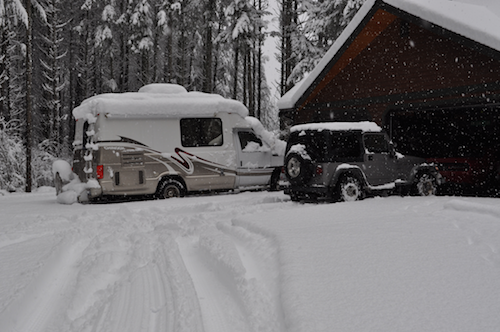
This is the continuation of the Series of Stupid Questions thread that was getting to be mostly about solar and batteries in the living space.
I did a little poking around to fix a few electrical issues, the most pressing of which was the horn not working. I got the horn to work but the engine now only starts from time to time. Mostly it does not. (I have a suspicion that I loosened on the wires that led to the relays in the engine bay.) But anyway, I removed what I thought was the Deep Cycle RV battery that powered the living area. But I think for some reason the batteries may have been switched. With that battery removed I get no power whatsoever to the engine or dash.
So... this what leads me back to our previous conversation - are the batteries in the engine bay so intermingled that you can't remove one without the whole system falling apart? Or in theory could I remove the "RV" battery and still power the "Van"?
https://youtu.be/uYL7TmJdNYA
<iframe width="560" height="315" src="https://www.youtube.com/embed/uYL7TmJdNYA" frameborder="0" allow="accelerometer; autoplay; encrypted-media; gyroscope; picture-in-picture" allowfullscreen></iframe>
This is what it sounds like when it tries to start. (My guess is I've somehow killed power intermittently to the fuel pump? Or maybe its not getting spark anymore?)
Also, here are the images of the batteries and such.
Electrical Issues 95 Concourse
Re: Electrical Issues 95 Concourse
Two quick things.
1. I tried to start it again and it started right up. It’s completely hit or miss.
2. Is there a way for me to move this thread? I realized that it should probably be under electrical and not general.
1. I tried to start it again and it started right up. It’s completely hit or miss.
2. Is there a way for me to move this thread? I realized that it should probably be under electrical and not general.

Re: Electrical Issues 95 Concourse
I'm slightly lost in your photos, but one note is that the start battery is on the opposite side on your year (to later ones). You probably figured that out though (start battery should be on driver's side in your rig, I believe).
Have you looked through the thread I linked (kyidletime started it)? I know it's really long, but it looks like you have a very similar setup. When he first posted I had not seen a setup from that era, and also his previous owner had mysteriously bypassed a bunch of stuff and it was quite confusing. But by the end we had found diagrams, sussed it all out, and he had built a nice system with the house bank aft and not under the hood.
(That's not to say you shouldn't start this new thread, because you absolutely should. But you might get some good info from that thread. It's not fresh in my mind anymore either at this point since that was some years ago.)
PS: On my type of setup (1999), the house bank can be removed and there is no effect on the stock Ford system. Chinook literally tacked it on by adding another positive cable to the positive post of the start battery. Take that off and there is no connection anymore between the two systems (that I have ever seen). (Chinook did wire a few of their systems to the Ford start, such as automatic step, but it still holds that the Ford system does not change when you disconnect the house bank.)
Have you looked through the thread I linked (kyidletime started it)? I know it's really long, but it looks like you have a very similar setup. When he first posted I had not seen a setup from that era, and also his previous owner had mysteriously bypassed a bunch of stuff and it was quite confusing. But by the end we had found diagrams, sussed it all out, and he had built a nice system with the house bank aft and not under the hood.
(That's not to say you shouldn't start this new thread, because you absolutely should. But you might get some good info from that thread. It's not fresh in my mind anymore either at this point since that was some years ago.)
PS: On my type of setup (1999), the house bank can be removed and there is no effect on the stock Ford system. Chinook literally tacked it on by adding another positive cable to the positive post of the start battery. Take that off and there is no connection anymore between the two systems (that I have ever seen). (Chinook did wire a few of their systems to the Ford start, such as automatic step, but it still holds that the Ford system does not change when you disconnect the house bank.)
1999 Concourse
Re: Electrical Issues 95 Concourse
Thanks for the reply. I did read that thread, and one more about a year after. Both were very informative, while at same time making my head spin.
I feel like the solution in both cases was the replacement of the original solenoids with the BlueSea unit. I was a little unclear as to whether each solenoid required its own unit, or if they were a one for one swap?
Also, if I were to remove the house battery from the engine bay and move it back the living space (so I could link several together and add a more robust solar power system, would the BlueSea units still be the way I should go? (And, as I understand I need to make sure the wires that run back would need to be significantly hardy?)
My initial plan was to strip the electrical system in the engine bay down first and get everything on the “van” side of things working correctly. The next step would be to strip out some of the living quarters and incorporate the upgrades to the electrical system at the same time we renovate the back. Do you think that makes sense?
And, any idea why the starting is so hit or miss? I know it’s an electrical issue, but I can’t figure out where or why.
Thanks again!
Tim
I feel like the solution in both cases was the replacement of the original solenoids with the BlueSea unit. I was a little unclear as to whether each solenoid required its own unit, or if they were a one for one swap?
Also, if I were to remove the house battery from the engine bay and move it back the living space (so I could link several together and add a more robust solar power system, would the BlueSea units still be the way I should go? (And, as I understand I need to make sure the wires that run back would need to be significantly hardy?)
My initial plan was to strip the electrical system in the engine bay down first and get everything on the “van” side of things working correctly. The next step would be to strip out some of the living quarters and incorporate the upgrades to the electrical system at the same time we renovate the back. Do you think that makes sense?
And, any idea why the starting is so hit or miss? I know it’s an electrical issue, but I can’t figure out where or why.
Thanks again!
Tim
Re: Electrical Issues 95 Concourse
I would make sure it is not the starter problem. Sometimes, the bearing or other issues on it is bad, and starting the engine is like a hit or miss. Ensure the battery have proper amount of charge in them, and make sure there is no unknown leak. Now, once you know the starter battery is good, and the starter is good, then it must be the wiring. The good news is that once you get to the wiring stage, it can be solved methodically.
The only one suggestion that I have for you at this stage is that it maybe easier for you to separate the chassis side from the coach side. You can link them together later relatively easy as long as you stay with 12 V.
As for the thread location, once there is one or two replies in it, it is best to bribe Manitou to move it for you.
The only one suggestion that I have for you at this stage is that it maybe easier for you to separate the chassis side from the coach side. You can link them together later relatively easy as long as you stay with 12 V.
As for the thread location, once there is one or two replies in it, it is best to bribe Manitou to move it for you.
2000 Concourse dinette, on 1999 6.8L Ford E350 Triton V-10 Chassis
Re: Electrical Issues 95 Concourse
I forgot to say anything about the Blue Sea (or other) combiner.
Just to back up a bit, essentially what we have are two separate systems. The Ford system we can call "Start," and the living room system is "House." So for the most part, they are two completely separate systems. Once both systems are established, then you can choose to be able to combine them, and there are a few different ways depending on how you want it to work. In a nutshell, there is one positive cable that runs between the positive Start battery terminal, and the positive House battery(ies) terminal. You interrupt that with anything from a manual switch, to a Blue Sea ACR, to a specialized charger.
But to me it first makes sense to build your house system (so you have something to combine TO).
How to build your house system depends on your use case (or cases), your preferences, and your budget. There is no one best. (There are improper and proper ways to do any of the systems, but I'm referring to which "system" is best. There isn't one. Just so you know.
68Camaro is a great example. He wanted to be able to camp for a weekend and be self sufficient without the generator (99% of the time, with that 1% covered by the Onan). So you'd think let's lob on the solar panels, right? Aha BUT, he only camps in places that are like 99.99% shaded by huge trees. So that's bad. But on the other hand, he has access to charging (via shorepower) before and after every weekend. So he really just needs a system that can carry him through the weekend. I won't bog down in the details of how he ended up setting it up, but if he had done the expected thing (building up a good solar system), it would have done about zilch for his use case. Instead he concentrated on making the most of the alternator charging (good cabling, combiner), building up the house bank so it could last him, and then being aware of which loads are real power sucks and which aren't.
So, if you want to share a bit about your future use(s), we could try to come up with some system options. Do think about where you want to go, budget-wise. No sense talking about big fancy systems and then finding out you want to keep it to $200. iI's all about tailoring it. It's only the RV builders who (mostly) built them all to one (same) main use case. But we owners can change that now if we choose to.
Just to back up a bit, essentially what we have are two separate systems. The Ford system we can call "Start," and the living room system is "House." So for the most part, they are two completely separate systems. Once both systems are established, then you can choose to be able to combine them, and there are a few different ways depending on how you want it to work. In a nutshell, there is one positive cable that runs between the positive Start battery terminal, and the positive House battery(ies) terminal. You interrupt that with anything from a manual switch, to a Blue Sea ACR, to a specialized charger.
But to me it first makes sense to build your house system (so you have something to combine TO).
How to build your house system depends on your use case (or cases), your preferences, and your budget. There is no one best. (There are improper and proper ways to do any of the systems, but I'm referring to which "system" is best. There isn't one. Just so you know.
68Camaro is a great example. He wanted to be able to camp for a weekend and be self sufficient without the generator (99% of the time, with that 1% covered by the Onan). So you'd think let's lob on the solar panels, right? Aha BUT, he only camps in places that are like 99.99% shaded by huge trees. So that's bad. But on the other hand, he has access to charging (via shorepower) before and after every weekend. So he really just needs a system that can carry him through the weekend. I won't bog down in the details of how he ended up setting it up, but if he had done the expected thing (building up a good solar system), it would have done about zilch for his use case. Instead he concentrated on making the most of the alternator charging (good cabling, combiner), building up the house bank so it could last him, and then being aware of which loads are real power sucks and which aren't.
So, if you want to share a bit about your future use(s), we could try to come up with some system options. Do think about where you want to go, budget-wise. No sense talking about big fancy systems and then finding out you want to keep it to $200. iI's all about tailoring it. It's only the RV builders who (mostly) built them all to one (same) main use case. But we owners can change that now if we choose to.
1999 Concourse
Re: Electrical Issues 95 Concourse
That all makes a lot of sense. I was actually able to fix the starting issue this morning. I ended up rewiring one the relays against the firewall that I believe controls the fuel pump, and wouldn't you know it, that wasn't the problem at all!  But in the process of doing that I noticed a bad connection lower down which was causing the problem. All's well that ends well.
I have also disconnected and removed the House battery with no ill effects. The previous owner has indeed swapped the Start battery and the House battery, I'm not sure why. So the House battery was a completely dead standard car battery. This is why none of the House electric worked when not connected to shore power. So I bought a new Start battery and put the deep cycle battery into the proper spot and now all the House electric works! After I knew it worked I disconnected it for now to work on a series of other problems.
But, onto the bigger picture. My wife and I live in the Boston area, but we would like to be able to do cross country trips. My ultimate goal would be to able able to boondock for a could of days without worrying about the batteries. I was thinking about getting two (maybe three?) of these: https://www.amazon.com/dp/B004DR3IIC/?c ... _lig_dp_it
I looked into the Lithium Ion batteries and while I totally understand the benefits, they get pricey fast.
These were the solar panels I was looking at: https://www.amazon.com/gp/product/B00BF ... network-20
How does that sound as a jumping off point for discussion?
Thanks again for all your help, I really really appreciate your expertise.
Tim
But in the process of doing that I noticed a bad connection lower down which was causing the problem. All's well that ends well. I have also disconnected and removed the House battery with no ill effects. The previous owner has indeed swapped the Start battery and the House battery, I'm not sure why. So the House battery was a completely dead standard car battery. This is why none of the House electric worked when not connected to shore power. So I bought a new Start battery and put the deep cycle battery into the proper spot and now all the House electric works! After I knew it worked I disconnected it for now to work on a series of other problems.
But, onto the bigger picture. My wife and I live in the Boston area, but we would like to be able to do cross country trips. My ultimate goal would be to able able to boondock for a could of days without worrying about the batteries. I was thinking about getting two (maybe three?) of these: https://www.amazon.com/dp/B004DR3IIC/?c ... _lig_dp_it
I looked into the Lithium Ion batteries and while I totally understand the benefits, they get pricey fast.
These were the solar panels I was looking at: https://www.amazon.com/gp/product/B00BF ... network-20
How does that sound as a jumping off point for discussion?
Thanks again for all your help, I really really appreciate your expertise.
Tim
Re: Electrical Issues 95 Concourse
I have the following comments.
1, Li is great, but you need to use a different charger/converter, a different solar charger, a different LVD. I *think* you may also need a different battery combiner if you decide to integrate your chassis and the house system. Once you change the battery type, the entire system will need to be revisited, so it is not like you can do it piece by piece.
2, you may want to charge up the deep cycle really well before putting it away.
3, if you want to do cross country trip, it depends on what you want to do while you are boondocking. We all can go cross country in a little Honda civic, but the difference in having the rig is that it has other amenities that we can do in a civic. Are you going to cook a ten course dinner for two every evening? Do you want to take a 45 minutes shower in full blast every morning? etc. Tell us what you have in mind when you are not driving.
Oh, BTW, glad that you are able to get it started. It is more fun to work on the coach portion, than the Ford portion, at least for me.
1, Li is great, but you need to use a different charger/converter, a different solar charger, a different LVD. I *think* you may also need a different battery combiner if you decide to integrate your chassis and the house system. Once you change the battery type, the entire system will need to be revisited, so it is not like you can do it piece by piece.
2, you may want to charge up the deep cycle really well before putting it away.
3, if you want to do cross country trip, it depends on what you want to do while you are boondocking. We all can go cross country in a little Honda civic, but the difference in having the rig is that it has other amenities that we can do in a civic. Are you going to cook a ten course dinner for two every evening? Do you want to take a 45 minutes shower in full blast every morning? etc. Tell us what you have in mind when you are not driving.
Oh, BTW, glad that you are able to get it started. It is more fun to work on the coach portion, than the Ford portion, at least for me.
2000 Concourse dinette, on 1999 6.8L Ford E350 Triton V-10 Chassis
Re: Electrical Issues 95 Concourse
As usual, chin_k is on the right track. Not that you have to tell us all your plans, but without more info it's not really possible to narrow down the options. chin_k I love your Honda example.
But okay, we know you may want to boondock for a couple of days. That's useful info. Now, what are the conditions under which you want to boondock? Do you want it to be "just like home," where you use everything to your heart's content, without paying attention? Are you figuring you'll use it as a "hard sided tent" while you are boondocking? Or somewhere in between?
Some things are easy: LED lights, charging phones and tablets, charging AA batteries, running a marine fan. Those use almost no power. I boondocked like that for some months after I got my Chinook (which came with only the very wimpy stock solar panel and one cheapo Group 27 house battery - minimal system).
Next you have things like water pump (high draw but short use), stereo, charging laptops, watching TV These aren't huge draws (or are of limited duration), but not mindless either.
A compressor refrigerator (not the propane type) is a smallish draw, but may have a 50% duty cycle. The furnace is also quite power hungry. These you need to plan carefully.
Lastly, you have draws that go way over the line unless you are set up for them specifically. In this category I'd put microwave, anything electric that heats, and, top of the heap, air-conditioning.
Now, if you have a generator, you can run that, BUT it's noisy (both to you and to anyone camping within a half mile). So that depends on your tolerance for noise and where you are (truck stop? no problem; Forest service campground? Please don't).
At this point we don't need spreadsheets of draws and amps and etc. but more an overall feel for what you want to live like.
Hand in hand with that is what kind of money are you interested in putting into any upgrades? We don't need your financial details, but rather what your budget philosophy is toward this particular RV. Again, it helps us to not get bogged down in "solutions" that for one reason or another, wouldn't be.
But okay, we know you may want to boondock for a couple of days. That's useful info. Now, what are the conditions under which you want to boondock? Do you want it to be "just like home," where you use everything to your heart's content, without paying attention? Are you figuring you'll use it as a "hard sided tent" while you are boondocking? Or somewhere in between?
Some things are easy: LED lights, charging phones and tablets, charging AA batteries, running a marine fan. Those use almost no power. I boondocked like that for some months after I got my Chinook (which came with only the very wimpy stock solar panel and one cheapo Group 27 house battery - minimal system).
Next you have things like water pump (high draw but short use), stereo, charging laptops, watching TV These aren't huge draws (or are of limited duration), but not mindless either.
A compressor refrigerator (not the propane type) is a smallish draw, but may have a 50% duty cycle. The furnace is also quite power hungry. These you need to plan carefully.
Lastly, you have draws that go way over the line unless you are set up for them specifically. In this category I'd put microwave, anything electric that heats, and, top of the heap, air-conditioning.
Now, if you have a generator, you can run that, BUT it's noisy (both to you and to anyone camping within a half mile). So that depends on your tolerance for noise and where you are (truck stop? no problem; Forest service campground? Please don't).
At this point we don't need spreadsheets of draws and amps and etc. but more an overall feel for what you want to live like.
Hand in hand with that is what kind of money are you interested in putting into any upgrades? We don't need your financial details, but rather what your budget philosophy is toward this particular RV. Again, it helps us to not get bogged down in "solutions" that for one reason or another, wouldn't be.
1999 Concourse
Re: Electrical Issues 95 Concourse
Understood. In an ideal world I would like to be able to comfortably be able to run everything but the AC. My budgeting philosophy is that it is often cheaper to do it right one than do it badly twice. Having said that, I don't think Li is in the cards for us, but three or four good quality panels, solid mid-range batteries and the proper hardware to run it all and to future proof it a bit would be great.