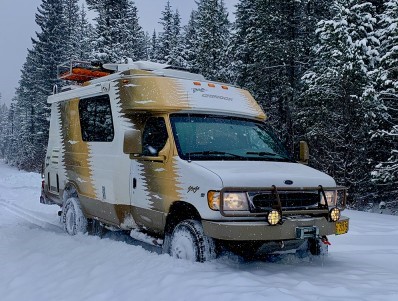
Hi everyone! I'm new to this forum, having just purchased a 2003 Chinook Concourse. Love-love-love the Chinook!
When I boondock, I am somehow draining the chassis battery. So if I boondock for more than 2 days, I have to use the boost button to turn the engine. Thinking there was an electrical short, I took it to a shop. They said when the coach batteries are turned on via the overhead switch, this draws .05 amp from the chassis battery. I'm fine with turning that off when I am storing the camper. But when I'm boondocking I don't like the idea of draining the chassis battery. My hope was that the coach batteries would power the coach and the solar panel would help keep the coach batteries charged. I'm going to test that the solar is providing charge to the coach batteries. Should I also look at the separator? How do I test it? What are your thoughts? Thank you!
Boondocking: Why does this keep happening?
-
TheBluebird

- Posts: 29
- Joined: July 15th, 2018, 8:09 am
Boondocking: Why does this keep happening?
Fulltiming in my 2003 Concourse since November 2018.
Re: Boondocking: Why does this keep happening?
The separator should disconnect the chassis battery from the rest of the coach when the voltage is below the requirement in the spec. I think you should trouble shoot the separator to make sure it is working properly, or disconnect the chassis battery from the coach and see if that will still drain the battery. 0.05A is very small current, and should not drain a healthy battery in two days. I think you can also check out and see if the waste tanks heaters are on, or other power drain that cause your problem. Or it is simply that your chassis battery is just too old to hold the charge. When was it made?
2000 Concourse dinette, on 1999 6.8L Ford E350 Triton V-10 Chassis

Re: Boondocking: Why does this keep happening?
Welcome! I've only seen a few "swoopy" Chinooks with that blue/green color scheme and it is one of my favorites. So nice!
So, why is your chassis battery draining while you boondock. You are right in that it should be "sacred" and untouchable so you always have it to start and go (without constantly using the crutch of the self-jump-start). I can think of three possibilities (there are probably more but these come to mind):
1) You simply have a parasitic load on the start battery (from the cab/Ford system). But if this doesn't happen when you are parked (not camping) then it doesn't seem likely, unless you do something different when you are boondocking (GPS plugged in or something else charging from dash 12v outlets, etc.).
2) You are running the coach (living room) stereo a lot while camping (it draws power from both the start and house batteries as wired from Chinook - some of us have changed it so it only draws from the house batteries).
3) Something has gone haywire with your separator. I don't know if a 2003 came with the same one mine did, but mine was a Surepower 1315. Notice I said "was." A few reasons for that:
a) It was recalled by Surepower (there is a serial number range).
b) It's an older style separator and there are (IMO) better ones now (newer magnetic latching types don't draw power like the older ones do, and also don't induce voltage drop. They can also be manually locked out, etc.).
c) The location on the fenderwell was not only hot (engine) and potentially wet, it was dang near impossible to get to (check the connections? Ha, maybe if you have mouse arms).
Any of these only need to be somewhere along the path of the wire from the start battery positive post to the house battery positive post, so they don't need to be in the engine compartment necessarily.
Are you familiar with testing with a meter?
So, why is your chassis battery draining while you boondock. You are right in that it should be "sacred" and untouchable so you always have it to start and go (without constantly using the crutch of the self-jump-start). I can think of three possibilities (there are probably more but these come to mind):
1) You simply have a parasitic load on the start battery (from the cab/Ford system). But if this doesn't happen when you are parked (not camping) then it doesn't seem likely, unless you do something different when you are boondocking (GPS plugged in or something else charging from dash 12v outlets, etc.).
2) You are running the coach (living room) stereo a lot while camping (it draws power from both the start and house batteries as wired from Chinook - some of us have changed it so it only draws from the house batteries).
3) Something has gone haywire with your separator. I don't know if a 2003 came with the same one mine did, but mine was a Surepower 1315. Notice I said "was." A few reasons for that:
a) It was recalled by Surepower (there is a serial number range).
b) It's an older style separator and there are (IMO) better ones now (newer magnetic latching types don't draw power like the older ones do, and also don't induce voltage drop. They can also be manually locked out, etc.).
c) The location on the fenderwell was not only hot (engine) and potentially wet, it was dang near impossible to get to (check the connections? Ha, maybe if you have mouse arms).
Any of these only need to be somewhere along the path of the wire from the start battery positive post to the house battery positive post, so they don't need to be in the engine compartment necessarily.
Are you familiar with testing with a meter?
1999 Concourse
-
TheBluebird
- Posts: 29
- Joined: July 15th, 2018, 8:09 am
Re: Boondocking: Why does this keep happening?
@Chin-k
Thanks for the reply. The battery was new in June so that doesn't seem to be the problem.
@Blue
Thanks for the reply and for the welcome. I feel so lucky to have the blue swoopy design, it's called Millenial Blue, I believe. I just purchased this in late June and it's the sixth camper I've owned. I couldn't be more pleased with the Chinook!
Thanks to this wonderful forum, I learned about the recall and I looked it up and mine appears to be a replacement, same brand as original though. I don't know how to test it. I assume the first step is to purchase a voltmeter. Let me know if there's a particular brand or features you recommend. And, yes, it happens both camping and when parked. In the past week, I've replaced one of the cigarette lighters on the dash, as it had shorted out. It's possible that that may have caused this. I'm going to wait a couple days and see if the battery is dead again. Thank you!
Thanks for the reply. The battery was new in June so that doesn't seem to be the problem.
@Blue
Thanks for the reply and for the welcome. I feel so lucky to have the blue swoopy design, it's called Millenial Blue, I believe. I just purchased this in late June and it's the sixth camper I've owned. I couldn't be more pleased with the Chinook!
Thanks to this wonderful forum, I learned about the recall and I looked it up and mine appears to be a replacement, same brand as original though. I don't know how to test it. I assume the first step is to purchase a voltmeter. Let me know if there's a particular brand or features you recommend. And, yes, it happens both camping and when parked. In the past week, I've replaced one of the cigarette lighters on the dash, as it had shorted out. It's possible that that may have caused this. I'm going to wait a couple days and see if the battery is dead again. Thank you!
Fulltiming in my 2003 Concourse since November 2018.
Re: Boondocking: Why does this keep happening?
I think the swoopy design (in all color schemes) was called the "Millenium" paint job. You know, everything had to be millenium around 2000 and shortly thereafter 
So it happens both when parked and when camping? Hmmm. Well in a way that makes it easier as you can test it out any old time (since it would happen parked at home).
If you don't mind doing a bit of meter work, you can really use just about any multi-meter. The one I'm carrying around now is just a super cheapy (under $10) from an auto parts store. You put it on the start battery and see if it registers any amps. If so, I'd just start unplugging (or taking the fuses out) of any likely culprits and see when the draw goes away. Then bingo, you have it (unless it's going to be stubbornly mysterious).
There is one "thing" about measuring the amp draw. That is that unlike measuring voltage or resistance (when you can just put the probes on the battery post or device), to measure amp draw you have to "insert" the meter into the circuit. So on the start battery, for example, you would remove the negative battery cable, set the meter to DC amps, and then put one of the probes of the meter on the negative battery terminal, and one on the battery clamp you just removed from the battery terminal. So in other words the meter becomes "part of" the circuit and the power has to go through it. One caveat is that many small meters have a 10 amp fuse in them, so you wouldn't want to measure more than that. But likely your parasitic load is like 1-3 amps.
There is one other style of meter that makes it really easy (and can also measure large amp loads), and that is an amp clamp type meter. This has a pair of "arms" that you just put around the battery cable (or other wire). I wasn't sure if it would measure accurately enough for a small parasitic load but as it happens I just helped a friend with tracking down a parasitic load on her other-brand Class C. I first removed the cable and used the little cheap probe meter to measure it (was only around .8 amps), and then I put the battery cable back on and used the amp clamp - it also measured .8 amps. And is very easy. But they cost more.
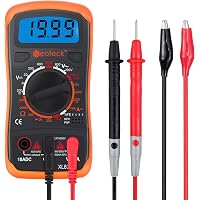
Here is an example of a simple multi-meter (that is still twice as much as my true cheapy):
https://www.amazon.com/Multimeter-Neote ... V7E5GY52D8
Here is the amp clamp I have (I got it so I could measure the starting amps of an engine, but it is nice for other things too):

https://www.amazon.com/Blue-Sea-Systems ... B0014GBWK6
Since it also happens when just parked, I'd start by testing for any draws at the start battery (easy to get to, and that's what's going flat).
If that wasn't clear (or is super obvious), sorry: I don't know how familiar you are with any of this so just picked a spot to start.
So it happens both when parked and when camping? Hmmm. Well in a way that makes it easier as you can test it out any old time (since it would happen parked at home).
If you don't mind doing a bit of meter work, you can really use just about any multi-meter. The one I'm carrying around now is just a super cheapy (under $10) from an auto parts store. You put it on the start battery and see if it registers any amps. If so, I'd just start unplugging (or taking the fuses out) of any likely culprits and see when the draw goes away. Then bingo, you have it (unless it's going to be stubbornly mysterious).
There is one "thing" about measuring the amp draw. That is that unlike measuring voltage or resistance (when you can just put the probes on the battery post or device), to measure amp draw you have to "insert" the meter into the circuit. So on the start battery, for example, you would remove the negative battery cable, set the meter to DC amps, and then put one of the probes of the meter on the negative battery terminal, and one on the battery clamp you just removed from the battery terminal. So in other words the meter becomes "part of" the circuit and the power has to go through it. One caveat is that many small meters have a 10 amp fuse in them, so you wouldn't want to measure more than that. But likely your parasitic load is like 1-3 amps.
There is one other style of meter that makes it really easy (and can also measure large amp loads), and that is an amp clamp type meter. This has a pair of "arms" that you just put around the battery cable (or other wire). I wasn't sure if it would measure accurately enough for a small parasitic load but as it happens I just helped a friend with tracking down a parasitic load on her other-brand Class C. I first removed the cable and used the little cheap probe meter to measure it (was only around .8 amps), and then I put the battery cable back on and used the amp clamp - it also measured .8 amps. And is very easy. But they cost more.
Here is an example of a simple multi-meter (that is still twice as much as my true cheapy):
https://www.amazon.com/Multimeter-Neote ... V7E5GY52D8
Here is the amp clamp I have (I got it so I could measure the starting amps of an engine, but it is nice for other things too):
https://www.amazon.com/Blue-Sea-Systems ... B0014GBWK6
Since it also happens when just parked, I'd start by testing for any draws at the start battery (easy to get to, and that's what's going flat).
If that wasn't clear (or is super obvious), sorry: I don't know how familiar you are with any of this so just picked a spot to start.
Last edited by Blue~Go on October 1st, 2018, 8:37 am, edited 1 time in total.
1999 Concourse
-
TheBluebird
- Posts: 29
- Joined: July 15th, 2018, 8:09 am
Re: Boondocking: Why does this keep happening?
I just tried to start the engine and the chassis battery is dead yet again. There is nothing plugged in up front, no GPS or anything like that. And I never use the coach stereo. I'm not boondocking at the moment, it's just parked in my driveway. I'll order the voltmeter and test the separator. Thank you for the recommendation! I'll report back, stay tuned!
Fulltiming in my 2003 Concourse since November 2018.
Re: Boondocking: Why does this keep happening?
Guh. Well, at least you have something you can test for now, vs. some weird intermittent thing that only happens when you are out camping.
I wouldn't say it couldn't be the separator, but I'm not sure I see that as most probable. Just to follow my logic (and see if it does actually sound logical), I"m going to think out loud.
1) So you have an electrical cable that runs from the start battery positive post straight to the house battery (bank) positive post. That means it's essentially one big battery bank. But you don't always want that, so...
(The reasons you would ever want one big battery bank are to charge the house bank with the alternator, self-jump start, or charge the start battery with solar, shore, or other coach charging source. )
2) There is a means to open or close that cable to flow. It could be as simple as an "on-off" switch*. When the switch was "on" then the cable would be complete and the start and house batteries would be as one. When the switch was "off" then the start battery and house battery bank would be completely separate systems** A switch is simple and robust, but it's not automated.
3) So in steps the relay (separator). What it does is sense power and then either "turn the switch" on or off. The 1315 is bi-directional. That means (I'm speaking in general terms here; various setpoints might not be the same on all units) that if it detects a charging (i.e. 13.x volts) voltage on either end (e.g. alternator current on start side, or solar power on house side) then it says "Oh, I'm going to open so the big cable connects the two and everyone can share the wealth of the power!" Then later, if that seems to go away (i.e. it sees a voltage of 12.6 or so from either side), it says "Hmm, the wealth seems to be gone. I'm going to close so that power no longer flows freely between the two battery banks."
A slight variation is a uni-directional relay (separator). I believe the Surepower 1314 is such a beast. In that case it would only ever connect and let charging power go from the start bank to the house bank, but NOT the other way around. This can be desirable or not desirable depending on what a person wants. I think the Chinooks all got 1315 bi-directional but not positive on that.
Okay, so my thinking is, let's say the separator is bad. I don't know which way they fail, so let's look at both cases.
A) Let's say it fails with the relay open (cable interrupted). That would mean each battery bank was on its own. No charging OR draws would flow between start and house (with the possible exceptions of ** below, but they don't go via the big cable). But that shouldn't draw down your start battery. That just means that your start battery is sitting on its own, like every start battery does in most vehicles. Sure, maybe after a month or two some tiny tiny draw could have an effect, but not in a few days. I would say not even in a week or two.
B) Now let's say it fails closed (now the big cable is one piece and charging or draws can flow freely between start and house battery banks). How is that going to draw down the start battery UNLESS your house bank is really ailing, or you have some load on in the coach that draws both banks down.
To test for "B," I would ask, when the start battery goes flat, what is the condition of the house battery bank? If it's fine, then I don't see how that can be the separator. If the house battery is not fine, then it might be the separator, but it also might not be as lots of house banks aren't fine.
So in short (ha), I am not sure that even a failed separator should cause this when you are NOT camping (presuming you don't leave big loads on the house bank when parked and that the house bank isn't failing). I don't know if there is some other crazy way it can fail, but I would think it would only fail open or closed (right? anyone have other thoughts?). It's early yet, so maybe my brain is missing something, but that's my thinking now.
So I would start by just putting a meter on the start battery and seeing if you can find a parasitic load. If there is one, start doing things until it goes away, basically. I guess with the Surepower there is no way to completely "shut off" the big cable to the house bank (?), but if you do this "removing things" in the cab and don't find that the load goes away we could re-visit this and then disconnect the house for sure. Things I'd "remove" in the cab would be the radio fuse (look in your Ford manual for fuse diagram; the fuse box is ahead of near your left shin when driving - there is a little fuse puller tool in the cover of the fuse box), any step fuse (maybe others with electric step know where this is?), any OBD reader you might have plugged in. If nothing there makes a difference, then we could move on to other possibilities.
****
Lastly I wanted to mention that the Chinook stock electrical system (and this still holds true for a majority of RV's today) was not designed to really do anything but drive from power post to power post. And even then the charger (of the house bank) is not one that is kind to batteries, plus its wired with a ton of voltage drop. So unless you do some re-working of the system (and whether - or how - you would do that would depend on your use-case scenario(s)), it's "normal" to pretty much always have to be plugged in, running the generator, or driving -- and even within that to be buying house batteries every couple of years or so.
This it not a knock on Chinook. Their electrical work is as good as I have seen in any "normal" RV (i.e. not Earth Roamer or similar). Plus their market was people who traveled from power post to power post (retired folks downsizing from Class A's). And too, what was available in the late 90's and early 2000's was nothing like what we can get today (cheap solar, great solar controllers, amazing battery monitors). And people weren't buying Chinooks expecting to do anything but "go RV-ing" as it was seen then. Now there are a lot of good ways to set up a system, and the more your use-case scenario tends to one type, the more you can "specialize" in how you set things up (but even a "I want to be able to do lots of things" setup would look much different as you would do it now than when the Chinook was built.
BG
*This is actually what I put in. That's cause I like control, and it suits my purposes. Probably most people would prefer the automation of something like a Blue Sea 7622 automatic charging relay (more modern version of SurePower 1315).
**There are a couple of ways that Chinook allowed power to "slip around" that large cable and still intermingle. One is the coach stereo. Another might be electric steps (since I believe they have some ignition input into the control - I have a manual step so don't know the specifics). And if you have electric dump valves (which I doubt; I think that idea died a well-deserved death around 1999), they were also somewhat tied into the ignition. Also of course the "self jump start switch," but that doesn't really count as it does go through the separator.
I wouldn't say it couldn't be the separator, but I'm not sure I see that as most probable. Just to follow my logic (and see if it does actually sound logical), I"m going to think out loud.
1) So you have an electrical cable that runs from the start battery positive post straight to the house battery (bank) positive post. That means it's essentially one big battery bank. But you don't always want that, so...
(The reasons you would ever want one big battery bank are to charge the house bank with the alternator, self-jump start, or charge the start battery with solar, shore, or other coach charging source. )
2) There is a means to open or close that cable to flow. It could be as simple as an "on-off" switch*. When the switch was "on" then the cable would be complete and the start and house batteries would be as one. When the switch was "off" then the start battery and house battery bank would be completely separate systems** A switch is simple and robust, but it's not automated.
3) So in steps the relay (separator). What it does is sense power and then either "turn the switch" on or off. The 1315 is bi-directional. That means (I'm speaking in general terms here; various setpoints might not be the same on all units) that if it detects a charging (i.e. 13.x volts) voltage on either end (e.g. alternator current on start side, or solar power on house side) then it says "Oh, I'm going to open so the big cable connects the two and everyone can share the wealth of the power!" Then later, if that seems to go away (i.e. it sees a voltage of 12.6 or so from either side), it says "Hmm, the wealth seems to be gone. I'm going to close so that power no longer flows freely between the two battery banks."
A slight variation is a uni-directional relay (separator). I believe the Surepower 1314 is such a beast. In that case it would only ever connect and let charging power go from the start bank to the house bank, but NOT the other way around. This can be desirable or not desirable depending on what a person wants. I think the Chinooks all got 1315 bi-directional but not positive on that.
Okay, so my thinking is, let's say the separator is bad. I don't know which way they fail, so let's look at both cases.
A) Let's say it fails with the relay open (cable interrupted). That would mean each battery bank was on its own. No charging OR draws would flow between start and house (with the possible exceptions of ** below, but they don't go via the big cable). But that shouldn't draw down your start battery. That just means that your start battery is sitting on its own, like every start battery does in most vehicles. Sure, maybe after a month or two some tiny tiny draw could have an effect, but not in a few days. I would say not even in a week or two.
B) Now let's say it fails closed (now the big cable is one piece and charging or draws can flow freely between start and house battery banks). How is that going to draw down the start battery UNLESS your house bank is really ailing, or you have some load on in the coach that draws both banks down.
To test for "B," I would ask, when the start battery goes flat, what is the condition of the house battery bank? If it's fine, then I don't see how that can be the separator. If the house battery is not fine, then it might be the separator, but it also might not be as lots of house banks aren't fine.
So in short (ha), I am not sure that even a failed separator should cause this when you are NOT camping (presuming you don't leave big loads on the house bank when parked and that the house bank isn't failing). I don't know if there is some other crazy way it can fail, but I would think it would only fail open or closed (right? anyone have other thoughts?). It's early yet, so maybe my brain is missing something, but that's my thinking now.
So I would start by just putting a meter on the start battery and seeing if you can find a parasitic load. If there is one, start doing things until it goes away, basically. I guess with the Surepower there is no way to completely "shut off" the big cable to the house bank (?), but if you do this "removing things" in the cab and don't find that the load goes away we could re-visit this and then disconnect the house for sure. Things I'd "remove" in the cab would be the radio fuse (look in your Ford manual for fuse diagram; the fuse box is ahead of near your left shin when driving - there is a little fuse puller tool in the cover of the fuse box), any step fuse (maybe others with electric step know where this is?), any OBD reader you might have plugged in. If nothing there makes a difference, then we could move on to other possibilities.
****
Lastly I wanted to mention that the Chinook stock electrical system (and this still holds true for a majority of RV's today) was not designed to really do anything but drive from power post to power post. And even then the charger (of the house bank) is not one that is kind to batteries, plus its wired with a ton of voltage drop. So unless you do some re-working of the system (and whether - or how - you would do that would depend on your use-case scenario(s)), it's "normal" to pretty much always have to be plugged in, running the generator, or driving -- and even within that to be buying house batteries every couple of years or so.
This it not a knock on Chinook. Their electrical work is as good as I have seen in any "normal" RV (i.e. not Earth Roamer or similar). Plus their market was people who traveled from power post to power post (retired folks downsizing from Class A's). And too, what was available in the late 90's and early 2000's was nothing like what we can get today (cheap solar, great solar controllers, amazing battery monitors). And people weren't buying Chinooks expecting to do anything but "go RV-ing" as it was seen then. Now there are a lot of good ways to set up a system, and the more your use-case scenario tends to one type, the more you can "specialize" in how you set things up (but even a "I want to be able to do lots of things" setup would look much different as you would do it now than when the Chinook was built.
BG
*This is actually what I put in. That's cause I like control, and it suits my purposes. Probably most people would prefer the automation of something like a Blue Sea 7622 automatic charging relay (more modern version of SurePower 1315).
**There are a couple of ways that Chinook allowed power to "slip around" that large cable and still intermingle. One is the coach stereo. Another might be electric steps (since I believe they have some ignition input into the control - I have a manual step so don't know the specifics). And if you have electric dump valves (which I doubt; I think that idea died a well-deserved death around 1999), they were also somewhat tied into the ignition. Also of course the "self jump start switch," but that doesn't really count as it does go through the separator.
Last edited by Blue~Go on October 1st, 2018, 8:36 am, edited 1 time in total.
1999 Concourse
-
caconcourse

- Senior Member
- Posts: 510
- Joined: October 31st, 2014, 10:25 pm
Re: Boondocking: Why does this keep happening?
Here is a voltmeter with a DC power clamp for less than $50, which is a really good price. This is the unit I use for troubleshooting DC issues.
https://www.amazon.com/UT210E-Digital-Z ... 0AQTSEFTAZ
https://www.amazon.com/UT210E-Digital-Z ... 0AQTSEFTAZ
Clay
2001 Concourse
Santa Barbara, CA
2001 Concourse
Santa Barbara, CA
-
TheBluebird
- Posts: 29
- Joined: July 15th, 2018, 8:09 am
Re: Boondocking: Why does this keep happening?
@canconcourse
Wow, that's a great price on a voltmeter! Thank you!
@Blue
I so appreciate you taking the time to ponder my situation. The chassis battery is fine when I have the overhead switch turned to the off position. This is fine for storage, of course. No good when I'm boondocking.
The stereo is off, and is a replacement by the previous owner. When the overhead switch is off, no power goes to the coach stereo.
My separator is a Sure Power model 1314, Serial # 02000524, so that doesn't seem part of the recall. Anyway, it sounds like this could be the problem. I've never used a voltmeter before-- I'll have to YouTube how to do it once it arrives. Let me know what to look for when I test the separator, thanks!
Wow, that's a great price on a voltmeter! Thank you!
@Blue
I so appreciate you taking the time to ponder my situation. The chassis battery is fine when I have the overhead switch turned to the off position. This is fine for storage, of course. No good when I'm boondocking.
The stereo is off, and is a replacement by the previous owner. When the overhead switch is off, no power goes to the coach stereo.
My separator is a Sure Power model 1314, Serial # 02000524, so that doesn't seem part of the recall. Anyway, it sounds like this could be the problem. I've never used a voltmeter before-- I'll have to YouTube how to do it once it arrives. Let me know what to look for when I test the separator, thanks!
Fulltiming in my 2003 Concourse since November 2018.
Re: Boondocking: Why does this keep happening?
Okay, so a couple of things are either new, or, more likely, I didn't quite pick up on them before. So...
If it NEVER happens when the switch is in the off position, then that points to something in the coach I think. And it would not be one of the things that is still on even when the switch is off (I know, drove me nuts too, so my new switch turns EVERYTHING off). (Those things are propane and CO monitors, probably the electric step, and maybe a couple of other things I've forgotten; but if this problem doesn't happen when the switch is off, then it would not be one of these things.)
So car stereos (and that is what Chinook used) have TWO power wires. One turns the radio on and off, so that's obvious (goes to coach power). The other one is always "live" and what it does it things like save your station presets. So that's why Chinook wired that to the start battery system. If they had run them both to the coach battery then every time you turned that switch "Off" you would lose all your presets. Also I think this wire runs the "instant on" type feature that draws power.
You could test this: Set up some preset stations. Then turn the radio and the coach switch off. Then turn them back on and the radio on. Are the presets still set? If so, then I bet it's still wired the original way. This may or may not be the problem of course. Cars don't normally go flat and they always have this second power wire hooked up; but then too most people don't leave there cars sitting. (But if your Chinook goes flat in two days that's still wrong, as that radio second power wire shouldn't run it down that quickly.)
BobW here is the first person I know of who documented changing that wire. I followed his example (it was not complicated). Now my coach radio ONLY draws from the house system. Keeping presets didn't matter to me because when I'm traveling they don't really work anyway since I'm moving between areas. Also, I don't need to turn my house switch off but once in a blue moon (so they would stay preset anyway most of the time).
Okay, here is what I would do (note, I'm not an electrician, be careful with metal and meters around batteries, do only what you are comfortable with, etc.):
Engine not running for any of this, no shore or generator connection (small original solar panel should be ok).
1) Chinook battery switch off (condition where you have no problem).
--put voltmeter on Amps DC
--If it's a clamp meter, just clamp it around the battery cable of the start battery (I used the positive cable, if it's a clump of two cables, that's okay for now).
--If it's a regular meter with probes then,
--Detach negative start battery cable
--Put one probe on negative start battery post
--Put other probe on end of negative battery cable you just removed (i.e. insert meter inline in system).
Do you see any amps showing?
1) Chinook battery switch ON, with no charging sources such as shorepower, generator (solar probably okay).
now do the same thing on the start battery
Do you see any amps showing?
Side note: You will likely see two positive cables. One is a dual "schnozzle" and that is the Ford start cable. The other is a single and may go up and over to the other side near the back of the hood - that would be the separator cable. So if you have the amp clamp type meter, you could try just hooking it around THAT cable.
So let's see what you find...
Okay, so when you said it went flat in your driveway, you had the overhead switch in the "on" position? Maybe for an experiment? But if you have it parked just the same but the switch in the "off" position the battery does not go flat?TheBluebird wrote: October 2nd, 2018, 9:28 am The chassis battery is fine when I have the overhead switch turned to the off position. This is fine for storage, of course. No good when I'm boondocking.
If it NEVER happens when the switch is in the off position, then that points to something in the coach I think. And it would not be one of the things that is still on even when the switch is off (I know, drove me nuts too, so my new switch turns EVERYTHING off). (Those things are propane and CO monitors, probably the electric step, and maybe a couple of other things I've forgotten; but if this problem doesn't happen when the switch is off, then it would not be one of these things.)
Hmm, well then maybe the PO changed the wiring, or Chinook did (although I had not heard that for any year models). I submit that unless you know the PO changed the wiring, then the stereo might be wired to the start battery system, but you can't tell by casual looking. Here is why:TheBluebird wrote: October 2nd, 2018, 9:28 amThe stereo is off, and is a replacement by the previous owner. When the overhead switch is off, no power goes to the coach stereo.
So car stereos (and that is what Chinook used) have TWO power wires. One turns the radio on and off, so that's obvious (goes to coach power). The other one is always "live" and what it does it things like save your station presets. So that's why Chinook wired that to the start battery system. If they had run them both to the coach battery then every time you turned that switch "Off" you would lose all your presets. Also I think this wire runs the "instant on" type feature that draws power.
You could test this: Set up some preset stations. Then turn the radio and the coach switch off. Then turn them back on and the radio on. Are the presets still set? If so, then I bet it's still wired the original way. This may or may not be the problem of course. Cars don't normally go flat and they always have this second power wire hooked up; but then too most people don't leave there cars sitting. (But if your Chinook goes flat in two days that's still wrong, as that radio second power wire shouldn't run it down that quickly.)
BobW here is the first person I know of who documented changing that wire. I followed his example (it was not complicated). Now my coach radio ONLY draws from the house system. Keeping presets didn't matter to me because when I'm traveling they don't really work anyway since I'm moving between areas. Also, I don't need to turn my house switch off but once in a blue moon (so they would stay preset anyway most of the time).
Ah but so that could be one reason you have *noticed* your problem. Chinook used to use the bi-directional 1315. With that, the little trickle of power coming from the solar panel would likely have gone into the start battery as well as the house. That would only have masked the problem though. With the 1314, power ONLY goes from the start battery to the house. Not the other way around (1315 goes both ways).TheBluebird wrote: October 2nd, 2018, 9:28 amMy separator is a Sure Power model 1314, Serial # 02000524, so that doesn't seem part of the recall.
I have to think about that (or maybe someone else knows already). I wouldn't put it past it to fail. It's in a location that is very hard on it (hot, wet, dusty). It would have to be failing closed I guess (closed connects the two banks). If that happened, power could go from the start battery to the house battery. But.... is your house bank also going flat? If it's not going flat, then even if the relay were closed, then why would power be going out of your start battery? Power is usually "pulled" (by demand), not "pushed," if that makes sense. So if your house bank were getting low (had loads on it) AND the 1314 had failed closed, then I could see this. (If the 1314 failed open, or was working correctly, then it would be open and no power could get through.)TheBluebird wrote: October 2nd, 2018, 9:28 am Anyway, it sounds like this could be the problem. I've never used a voltmeter before-- I'll have to YouTube how to do it once it arrives. Let me know what to look for when I test the separator, thanks!
Okay, here is what I would do (note, I'm not an electrician, be careful with metal and meters around batteries, do only what you are comfortable with, etc.):
Engine not running for any of this, no shore or generator connection (small original solar panel should be ok).
1) Chinook battery switch off (condition where you have no problem).
--put voltmeter on Amps DC
--If it's a clamp meter, just clamp it around the battery cable of the start battery (I used the positive cable, if it's a clump of two cables, that's okay for now).
--If it's a regular meter with probes then,
--Detach negative start battery cable
--Put one probe on negative start battery post
--Put other probe on end of negative battery cable you just removed (i.e. insert meter inline in system).
Do you see any amps showing?
1) Chinook battery switch ON, with no charging sources such as shorepower, generator (solar probably okay).
now do the same thing on the start battery
Do you see any amps showing?
Side note: You will likely see two positive cables. One is a dual "schnozzle" and that is the Ford start cable. The other is a single and may go up and over to the other side near the back of the hood - that would be the separator cable. So if you have the amp clamp type meter, you could try just hooking it around THAT cable.
So let's see what you find...
1999 Concourse